Blind People Painting Inspiring Stories
- 1.
Blind People Painting: Redefining What It Means to “See” Art
- 2.
The Famous Blind Painter Who Proved Darkness Isn’t a Blank Canvas
- 3.
Can a Blind Person Really Paint? Spoiler: Hell Yeah
- 4.
What Famous Painter Went Blind? Art History’s Quiet Rebellion
- 5.
Was Claude Monet Legally Blind? When Light Fades, Art Blazes
- 6.
The Tools of the Trade: How Blind Artists “See” Their Canvases
- 7.
Blind People Painting in the Digital Age: Touchscreens, AI, and New Frontiers
- 8.
Emotional Palette: Why Blind Artists Often Paint With More Heart
- 9.
Workshops, Grants, and Communities Fueling Blind Creativity
- 10.
Challenging Stereotypes: Blind People Painting as Cultural Resistance
Table of Contents
Blind People Painting
Blind People Painting: Redefining What It Means to “See” Art
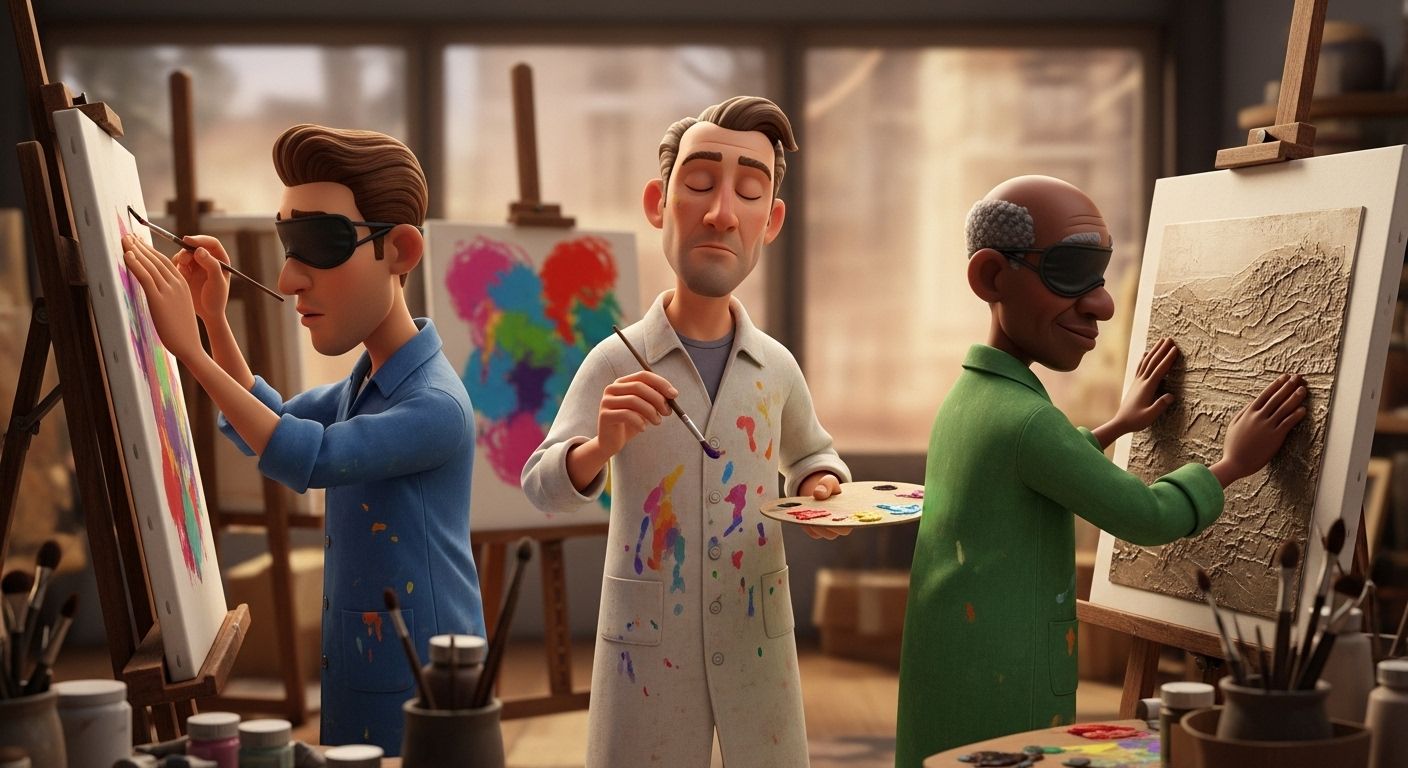
When we say someone “sees the world differently,” for blind people painting, it’s literal. Vision isn’t the only path to visual expression. In fact, some argue that removing sight forces artists to tap into deeper senses—touch, memory, sound, even smell—to guide their brushstrokes. Think about it: color becomes vibration, light becomes temperature, form becomes contour under fingertips. Blind people painting flips the whole “art = sight” script on its head, and honestly? We’re here for it.
The Famous Blind Painter Who Proved Darkness Isn’t a Blank Canvas
Among the most celebrated names in blind people painting is John Bramblitt. Once a sighted artist, Bramblitt lost his vision in his twenties due to complications from epilepsy. Instead of packing up his brushes, he taught himself to paint by developing a tactile technique—using raised lines and textured paints to navigate his canvas. His works have been featured everywhere from the UN to major galleries across the U.S. and beyond. And get this—he even paints portraits… of people he’s never seen. That’s not just talent; that’s soul-level translation. Bramblitt’s journey is living proof that blind people painting isn’t a contradiction—it’s a revolution.
Can a Blind Person Really Paint? Spoiler: Hell Yeah
You bet your palette they can. The question “Can a blind person paint?” feels almost quaint once you dive into real-world examples. From abstract expressionists to hyperrealists, blind people painting spans every genre imaginable. Some use braille-coded paint tubes, others collaborate with sighted assistants for framing, but the vision—pun intended—always comes from within. Studies from the American Foundation for the Blind show that over 40% of legally blind individuals engage in some form of creative practice, with painting being among the top three. So yeah, not only can they paint—they often paint better than the rest of us who technically see everything but feel nothing.
What Famous Painter Went Blind? Art History’s Quiet Rebellion
While Bramblitt is modern, he’s not alone in art history. Take Francisco Goya—yes, that Goya. In his later years, plagued by illness and likely lead poisoning, he descended into near-total blindness. Yet, he produced the haunting “Black Paintings,” dark, emotional masterpieces that many consider his finest work. Then there’s Edgar Degas, whose eyesight deteriorated so badly in old age that he switched to sculpture and pastels, which required less fine detail. These legends didn’t let vision loss silence their creativity. Instead, it sharpened it. Their legacy echoes in every blind people painting movement today—an unbroken line of defiance, painted one stroke at a time.
Was Claude Monet Legally Blind? When Light Fades, Art Blazes
Monet’s later water lilies? Yeah, those dreamy, blurry swirls of color weren’t just stylistic—they were born from cataracts so severe that doctors deemed him legally blind by 1923. Monet himself wrote letters describing colors as “muddy” and vision as “fog.” Yet, he kept painting, even labeling his tubes with braille-like ridges to identify hues. His works from this period—drenched in violet, red, and molten gold—are now hailed as precursors to abstract expressionism. So, was Monet legally blind? Technically, yes. But spiritually? He saw more than most of us ever will. That’s the paradox of blind people painting: sometimes, losing sight unlocks true vision.
The Tools of the Trade: How Blind Artists “See” Their Canvases
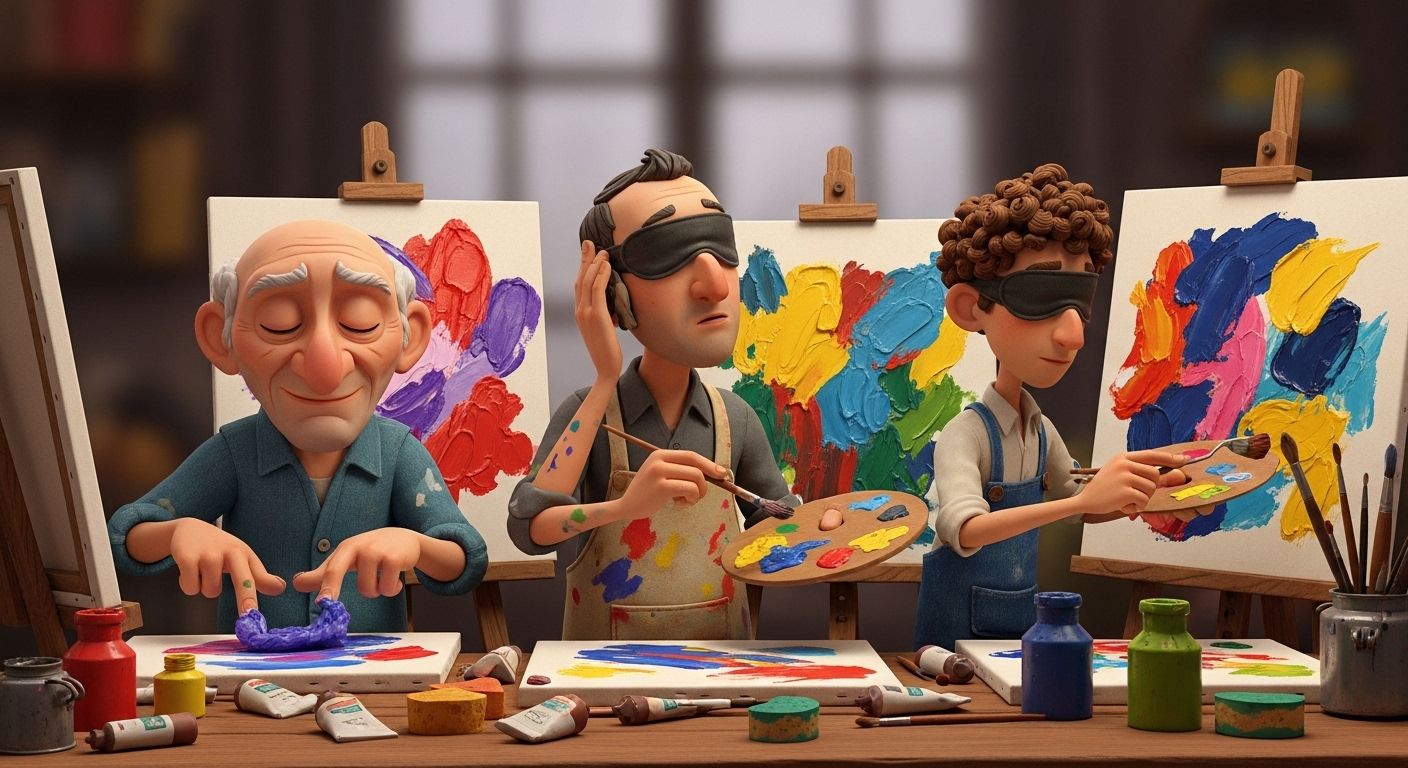
Forget regular brushes—many blind people painting rely on custom gear. Think 3D-printed stencils, thermoform paper that raises lines when heated, or even apps that convert colors into sound frequencies (yep, synesthesia IRL). Some artists mix sand, fabric, or wax into their paints to create tactile maps. Others use their fingers as primary tools, feeling every ridge and dip. It’s less about replicating reality and more about translating internal landscapes. As one artist put it: “I don’t paint what I see—I paint what I know.” And that knowledge? It’s often richer than optics alone can provide.
Blind People Painting in the Digital Age: Touchscreens, AI, and New Frontiers
Technology’s giving blind people painting a serious glow-up. Apps like “Seeing AI” or “Envision” can describe scenes aloud, helping artists reference real-world objects. Touchscreen tablets with haptic feedback allow digital painting through vibration cues. Even AI is stepping in—not to replace, but to assist. Imagine an algorithm that translates voice descriptions into brushstroke suggestions. It’s not sci-fi; it’s happening. And the best part? These tools aren’t just for the blind—they’re expanding what art *can be* for everyone. Inclusivity, baby. It’s the ultimate muse.
Emotional Palette: Why Blind Artists Often Paint With More Heart
Without visual clutter, many blind people painting lean into emotion as their compass. A sunset isn’t about orange gradients—it’s about warmth on skin, the sound of birds nesting, the smell of evening rain. This sensory storytelling creates art that doesn’t just hang on walls—it *lives* in rooms. Galleries hosting blind-led exhibitions often report visitors spending 3x longer with each piece, not because they’re confused, but because they’re *feeling* it. That’s the magic of blind people painting: it bypasses the eyes and heads straight for the gut.
Workshops, Grants, and Communities Fueling Blind Creativity
From New York to Seattle, orgs like Art Beyond Sight and Blind Artists Society are building spaces where blind people painting isn’t the exception—it’s the norm. These hubs offer tactile workshops, subsidized materials, even mentorship from established blind artists. Grants like the National Endowment for the Arts’ Accessibility Initiative fund projects that merge disability and creativity. And online? Reddit threads, Discord servers, and Instagram hashtags (#BlindArtRising) connect artists globally. It’s not just support—it’s a movement. And like all great movements, it started with someone daring to dip a brush in the dark.
Challenging Stereotypes: Blind People Painting as Cultural Resistance
Let’s be real: society still treats disability like a deficit. But blind people painting flips that narrative hard. Every stroke says, “I am not broken—I am reimagining.” It’s resistance disguised as color. And as we amplify these voices, we also reshape cultural expectations. For readers curious about this world, we invite you to explore more: start with the Brandon Kralik homepage to see how art transcends limits. Dive deeper in the Artists category for boundary-pushing creators. Or check out our feature on Zanele Muholi Artwork Powerful Portraits—another lens on art as identity and defiance.
Frequently Asked Questions
Who is the famous blind painter?
John Bramblitt is widely regarded as the most famous contemporary blind painter. After losing his sight in his twenties, he developed a unique tactile method to continue creating vivid, emotionally rich artworks. His story and techniques have made him a global ambassador for blind people painting, proving that vision isn't a prerequisite for visual art.
Can a blind person paint?
Absolutely, yes! Blind individuals paint using a range of adaptive techniques—texture-based guidance, memory, sound cues, and collaborative tools. The practice of blind people painting is not only possible but thriving, with many artists exhibiting internationally and redefining what artistic creation looks like.
What famous painter went blind?
Several renowned artists experienced significant vision loss. Francisco Goya painted his haunting “Black Paintings” after going nearly blind. Edgar Degas shifted to sculpture due to deteriorating eyesight. And Claude Monet created his iconic late water lily series while legally blind from cataracts. These legends exemplify how blind people painting has deep roots in art history.
Was Claude Monet legally blind?
Yes, by 1923, Monet was considered legally blind due to advanced cataracts. Despite this, he continued painting, using tactile markers on paint tubes and relying on memory and emotional resonance. His legally blind period produced some of his most celebrated works, reinforcing that blind people painting can yield profound artistic innovation.
References
- https://www.artbeyonddsight.org
- https://www.afb.org
- https://www.metmuseum.org/art/collection/search/437295
- https://www.britannica.com/biography/Claude-Monet