Minimalism Visual Art Simple Elegance
Table of Contents
minimalism visual art
Defining Minimalism Visual Art: Less Is Louder Than You Think
If baroque art’s wearin’ a sequined ball gown, minimalism visual art is chillin’ in sweatpants—clean, comfy, and zero F’s given. Born in the 1960s U.S., this movement flipped the script on emotional drama and complex symbolism. Instead of beggin’ for your attention with 50 layers of meaning, minimalism visual art just sits there, smirkin’. “I’m here. You figure it out.” No fluff, no frills—just geometry, color fields, and raw materials doin’ their thing. Think Donald Judd’s stacks or Agnes Martin’s grids. They ain’t tellin’ stories; they’re givin’ you space to write your own.
Historical Roots of Minimalist Art: From Zen to NYC Lofts
Folks often assume minimalism visual art popped up outta nowhere like a TikTok trend, but nah—it’s got deep roots. Japanese Zen aesthetics? Check. That whole “ma” concept—empty space as active, not passive? Big inspiration. Then there’s Russian Constructivism and De Stijl movin’ things toward pure form. But the real birthplace? Post-war New York. Artists like Frank Stella, Dan Flavin, and Sol LeWitt got tired of Abstract Expressionism’s emotional vomit. They wanted art that didn’t need therapy. So they said, “What if we just… stop?” And boom: minimalism visual art was born—raw plywood, fluorescent tubes, and industrial finishes that smelled more like a hardware store than a gallery.
Key Characteristics of Minimalism Visual Art: Geometry, Repetition, and Honesty
So, what’s the fingerprint of minimalism visual art? First: geometric forms. Squares, cubes, lines—nothing curvy unless it’s mathematically necessary. Second: repetition. Like, if one box is cool, ten identical boxes in a row? Chef’s kiss. Third: material honesty. If it’s steel, it looks like steel—no paint tryin’ to fake it as marble. And fourth: viewer interaction. The art ain’t complete ‘til you walk around it, feel its scale, and maybe trip over it (kidding… mostly). Minimalism visual art doesn’t hang on the wall whisperin’ secrets; it stands in the room challengin’ you to sit with it.
Minimalist Artists Who Shaped the Movement: The OG Quiet Rebels
Let’s give props where props are due. Donald Judd wasn’t just makin’ shelves—he was redefinin’ sculpture as “specific objects” that live in real space. Dan Flavin? Dude turned fluorescent light tubes into poetry. And Agnes Martin? Her pencil grids on canvas feel like meditations on peace, even if your brain’s racin’ at 90 mph. These weren’t show-offs. They were quiet revolutionaries who believed minimalism visual art could be a mirror—not a megaphone. Even Carl Andre’s floor tiles? Yeah, you walked on ‘em, and that was the point: art as part of life, not separate from it.
Why Minimalism Visual Art Resonates Today: Digital Detox for the Soul
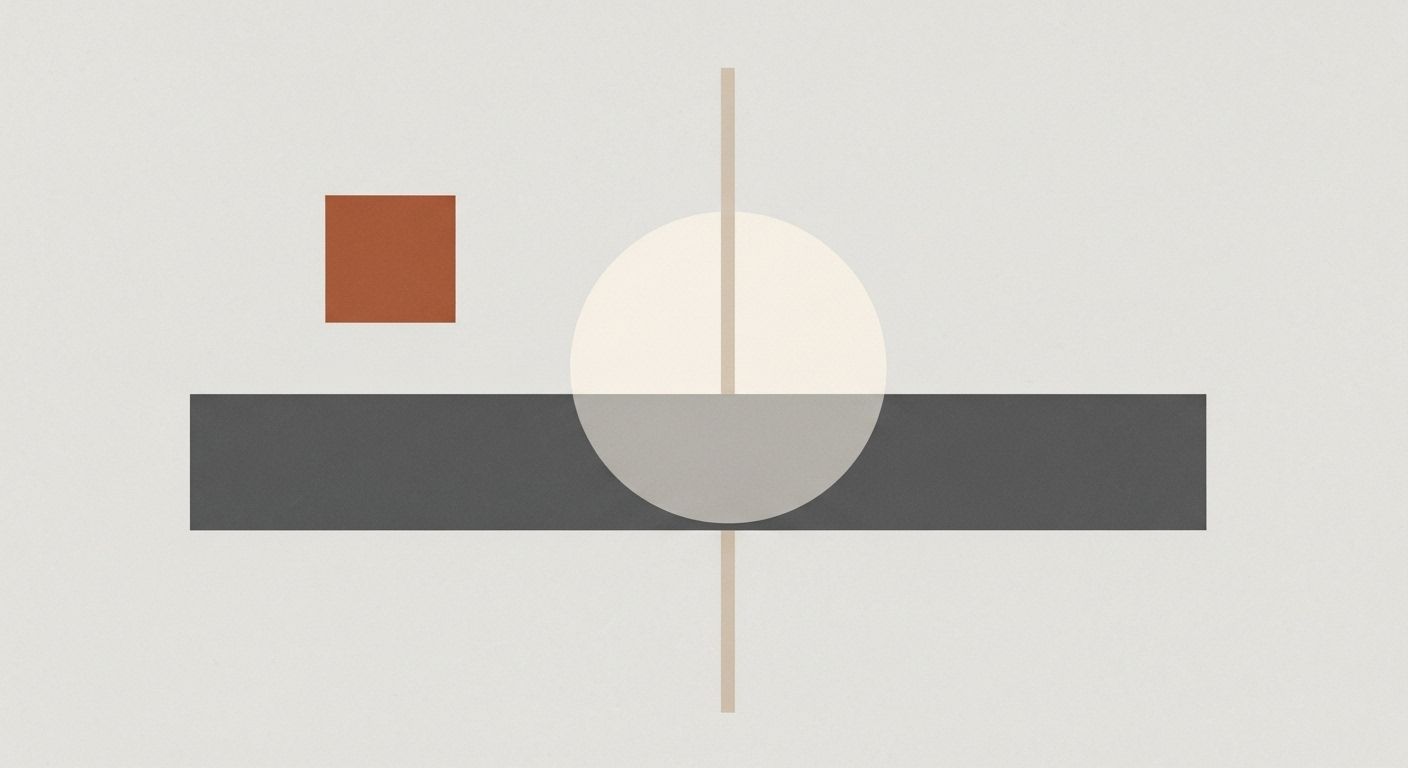
In a world where your phone buzzes every 37 seconds and your feed’s a circus of hot takes, minimalism visual art is the deep breath you didn’t know you needed. It’s the visual equivalent of turnin’ off notifications for a weekend. People are burnin’ out on clutter—both physical and mental—so minimalism visual art offers a sanctuary. No algorithms, no ads, just a single red square on a white wall sayin’, “Breathe, baby.” And honestly? That’s kinda radical now.
Minimalism vs. Other Art Styles: Where It Fits in the Big Picture
You might be wonderin’, “Ain’t all simple art minimalist?” Nope! Minimalism visual art isn’t just “basic”—it’s philosophically stripped-down. Compare it to Abstract Expressionism: de Kooning’s chaotic brushstrokes scream emotion; Judd’s boxes whisper neutrality. Or Pop Art: Warhol’s soup cans wink at consumer culture; minimalist cubes? They don’t wink—they stare blankly back. Even compared to Conceptual Art (which cares more about the idea than the object), minimalism visual art insists the object *is* the idea. No hidden meanings. No tricks. Just truth in form.
How to Identify a True Minimalist Piece: Spotting the Real Deal
Not every blank canvas is minimalist—some are just lazy. A genuine minimalism visual art piece has intentionality. Look for: industrial materials (aluminum, plexiglass, concrete), serial repetition, absence of visible artist’s hand (no brushstrokes!), and spatial awareness (it changes how you move through a room). If it feels like the artist spent more time thinkin’ than paintin’, you’re probably lookin’ at the real McCoy. Bonus: if a gallery guard has to stop you from sittin’ on it, it’s likely minimalist sculpture.
The Emotional Impact of Minimalism: Quiet Doesn’t Mean Cold
Some folks call minimalism visual art “cold” or “soulless.” But that’s missin’ the point. Ever stood in an empty field at dawn? No birds, no wind—just you and the horizon. Feels huge, right? That’s the emotional punch of minimalism visual art. It’s not about giving you feelings; it’s about makin’ space for your own. Agnes Martin once said her work was about “joy and innocence”—not exactly ice-cold vibes. The emptiness invites you in, like a friend who listens more than they talk.
Collecting Minimalist Art on a Budget: Simplicity Doesn’t Mean Expensive
Think minimalism visual art is only for hedge fund bros with blank checks? Think again. Emerging artists workin’ in the minimalist tradition often sell prints, small sculptures, or digital editions for under $200 USD. Plus, the aesthetic lends itself to DIY—if you’ve got a level, a roll of masking tape, and monochrome paint, you can channel your inner Frank Stella. Just don’t call it “minimalist” unless it’s got that intentional restraint. And hey, even if it’s not gallery-ready, it might just calm your chaotic corner of the world.
| Price Range | What You Can Get |
|---|---|
| Under $100 USD | Giclée prints, zine editions, small ceramic forms |
| $100–$500 USD | Original ink-on-paper grids, powder-coated metal wall pieces |
| $500–$2,000 USD | Limited edition sculptures, archival pigment prints |
Where to Explore Minimalism Visual Art: Galleries, Streets, and Your Own Mind
You don’t gotta fly to MoMA to vibe with minimalism visual art. Start local: check out artist-run spaces or university galleries—they often feature minimalist-leaning students testin’ boundaries. Online, platforms like Artsy or even Instagram (search #minimalismvisualart) turn up gems. And if you’re feelin’ introspective, just sit in a quiet room and notice the negative space around your lamp. That’s minimalist practice, baby. For deeper dives, visit Brandon Kralik for curated perspectives, browse the Paintings category for stylistic comparisons, or read our take on Caravaggio’s still life to see how dramatic light contrasts with minimalism visual art’s flat calm in Caravaggio Still Life With a Basket of Fruit Dramatic Light.
Frequently Asked Questions
What is minimalism in visual art?
Minimalism visual art is an art movement that emerged in the 1960s emphasizing simplicity, geometric forms, industrial materials, and the elimination of representational content. It focuses on the object itself rather than symbolic meaning, inviting viewers to experience space, form, and light directly.
What is one feature that distinguished minimal art?
One defining feature of minimalism visual art is its use of repetition and seriality—arranging identical or near-identical units in a grid or sequence to emphasize form over expression. This creates a meditative, almost architectural presence that distinguishes it from more emotionally driven styles.
What are the 4 main art styles?
While art history is vast, four broad categories often cited include: Representational (realistic depiction), Abstract (distorted or simplified forms), Non-Objective (no reference to reality—think minimalism visual art), and Conceptual (idea over aesthetics). Minimalism falls primarily under non-objective and sometimes conceptual, depending on the artist’s intent.
What is a simple minimalist art style?
A simple minimalist art style uses limited color palettes (often monochrome), clean lines, geometric shapes, and unadorned surfaces. It avoids narrative, symbolism, and visible brushwork, focusing instead on the purity of form—making minimalism visual art feel calm, deliberate, and spatially aware.
References
- https://www.moma.org/artists/2954
- https://www.tate.org.uk/art/art-terms/m/minimalism
- https://www.guggenheim.org/artwork/movement/minimalism
- https://arthistoryarchive.com/arthistory/minimalism/