Rijksmuseum Famous Paintings Dutch Classics
- 1.
What Makes the Rijksmuseum a Beacon for Art Lovers?
- 2.
Is The Night Watch Really the Crown Jewel of the Rijksmuseum?
- 3.
Who Are the Heavy Hitters in the Rijksmuseum’s Artist Lineup?
- 4.
Why Do Tourists Lose Their Minds Over The Milkmaid?
- 5.
How Does the Rijksmuseum Curate Its Masterpieces for Modern Eyes?
- 6.
Are There Hidden Gems Beyond the Big Names?
- 7.
What’s the Deal with Light in Dutch Golden Age Painting?
- 8.
How Do These Paintings Reflect Dutch Society of the 1600s?
- 9.
Why Is Amsterdam the Perfect Home for These Masterpieces?
- 10.
Where Can You Dive Deeper Into the World of Dutch Masters?
Table of Contents
rijksmuseum famous paintings
What Makes the Rijksmuseum a Beacon for Art Lovers?
Ever walked into a room and felt like the whole world just hit *pause*? That’s the exact energy you get stepping into the Rijksmuseum. Right in the middle of Amsterdam—think NYC’s Met but with more canals and fewer honking cabs—this place ain’t just another museum. Nah, it’s like walking into a time machine wired straight to the soul of Dutch art history. And smack-dab in the center of it all? A killer lineup of rijksmuseum famous paintings that’ll make you rethink how light, shadow, and raw human feels even work. Rembrandt’s got that moody, introspective stare-down, while Vermeer’s serving up quiet kitchen scenes like they’re Netflix miniseries. These pieces don’t just hang on walls—they *live*. Locals might call it “het paleis van de schilderkunst,” but most tourists? They’re just standing there, jaw on the floor, muttering, “Yo… is this real life?”
Is The Night Watch Really the Crown Jewel of the Rijksmuseum?
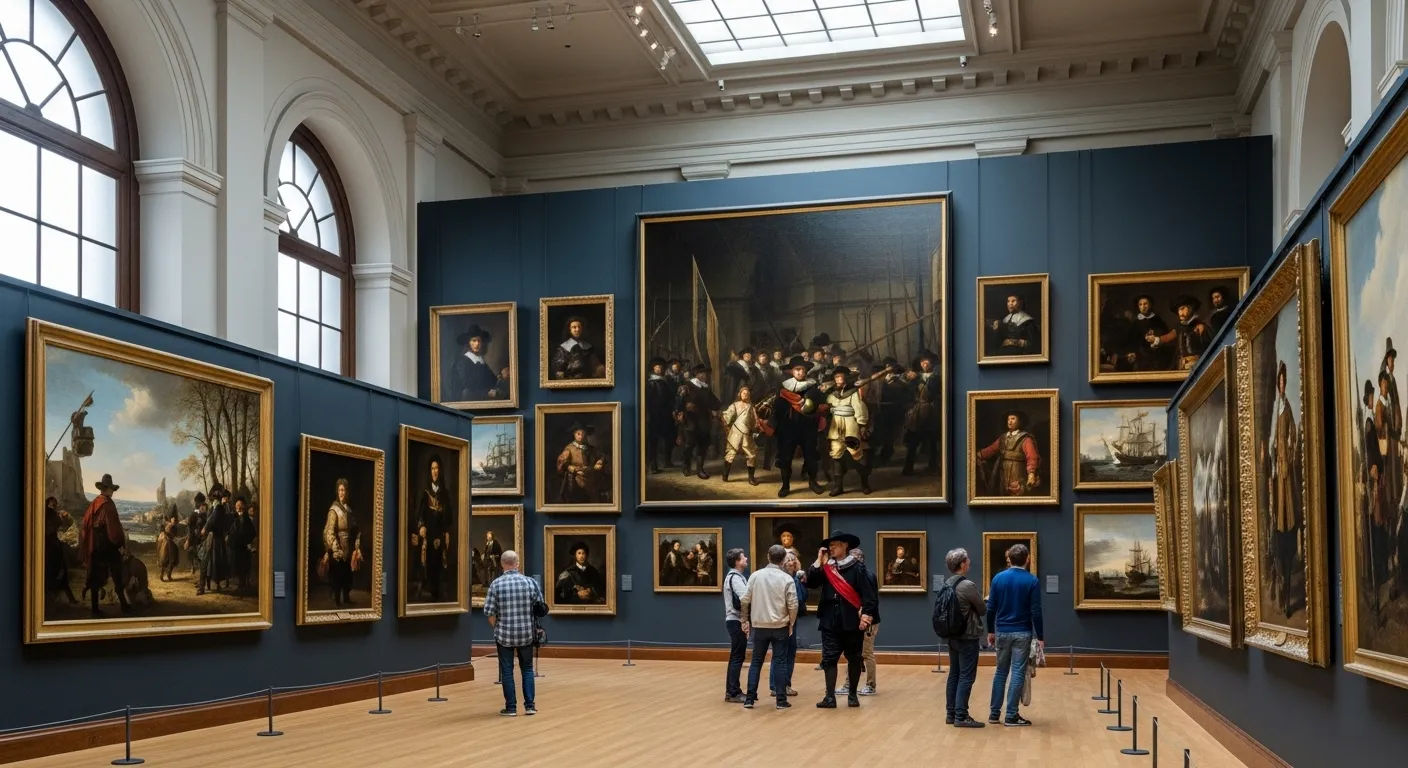
If the Rijksmuseum dropped an album, The Night Watch would be the lead single—the one that blows up TikTok before the rest even drop. Painted by Rembrandt back in 1642, this massive group portrait of Captain Frans Banning Cocq’s militia crew isn’t just big—it’s straight-up revolutionary. While other artists were lining folks up like mannequins at Macy’s, Rembrandt tossed ‘em into full motion: chaos, bro energy, and golden-hour lighting all in one frame. Official title? Something like *Militia Company of District II under the Command of Captain Frans Banning Cocq*. But let’s keep it 100—nobody calls it that. Everyone knows it as The Night Watch, even though it’s not actually nighttime (blame old-school varnish and centuries of dust). Now it’s front and center in the Gallery of Honour, lit up like Beyoncé closing Coachella. And don’t sleep on that tiny girl in yellow—she’s low-key the MVP of the whole painting.
Who Are the Heavy Hitters in the Rijksmuseum’s Artist Lineup?
When it comes to the squad behind the rijksmuseum famous paintings, think Dutch Golden Age Avengers. Rembrandt? Obviously—he’s the Tony Stark of chiaroscuro. Vermeer? For sure—his The Milkmaid alone could make someone cry into their avocado toast. Then there’s Frans Hals, whose brushwork’s so loose and confident, it’s like he painted with his eyes closed and still nailed it. Jan Steen’s the chaotic uncle of the bunch—his tavern scenes are packed with kids, dogs, spilled wine, and drama that’d trend on Twitter. And shoutout to Rachel Ruysch—one of the rare women in this boys’ club—whose flower paintings are so crisp, you’ll wanna sneeze just looking at ‘em. These aren’t just painters; they’re vibe architects who turned canvas into confessionals.
Why Do Tourists Lose Their Minds Over The Milkmaid?
At first glance, The Milkmaid looks simple: just a woman pouring milk in a sunlit kitchen. But stick around for a sec, and boom—you feel it. Vermeer didn’t just paint a servant; he painted *dignity*. Every crumb, every wrinkle in her apron, every glint off that brass jug? It’s all treated like sacred ground. What makes this one of the most beloved rijksmuseum famous paintings isn’t size (it’s actually kinda small) or subject (no crowns, no explosions)—it’s the quiet humanity. In a world obsessed with flexing, Vermeer whispered, “Look closer.” And people did. So hard, in fact, the museum had to rope it off so fans wouldn’t try to hug the frame. No cap—that really happened.
How Does the Rijksmuseum Curate Its Masterpieces for Modern Eyes?
Forget those dusty, snooze-fest museums with plaques written like tax forms. The Rijksmuseum’s 2013 glow-up—courtesy of Spanish architects Cruz y Ortiz—was less “facelift” and more “full spiritual reboot.” Natural light floods in like it’s golden hour 24/7, digital guides crack jokes (“Psst—Rembrandt was broke most of his life”), and the whole layout flows like a binge-worthy docuseries. The Gallery of Honour—home to the rijksmuseum famous paintings—feels like an art cathedral: high ceilings, hushed whispers, and that one bench where people sit for 20 minutes just staring at The Night Watch like it’s gonna wink back. Oh, and the gift shop? Sells socks with Vermeer’s pearl earring girl on ‘em. If that gets Gen Z caring about oil paint, honestly? We stan.
Are There Hidden Gems Beyond the Big Names?
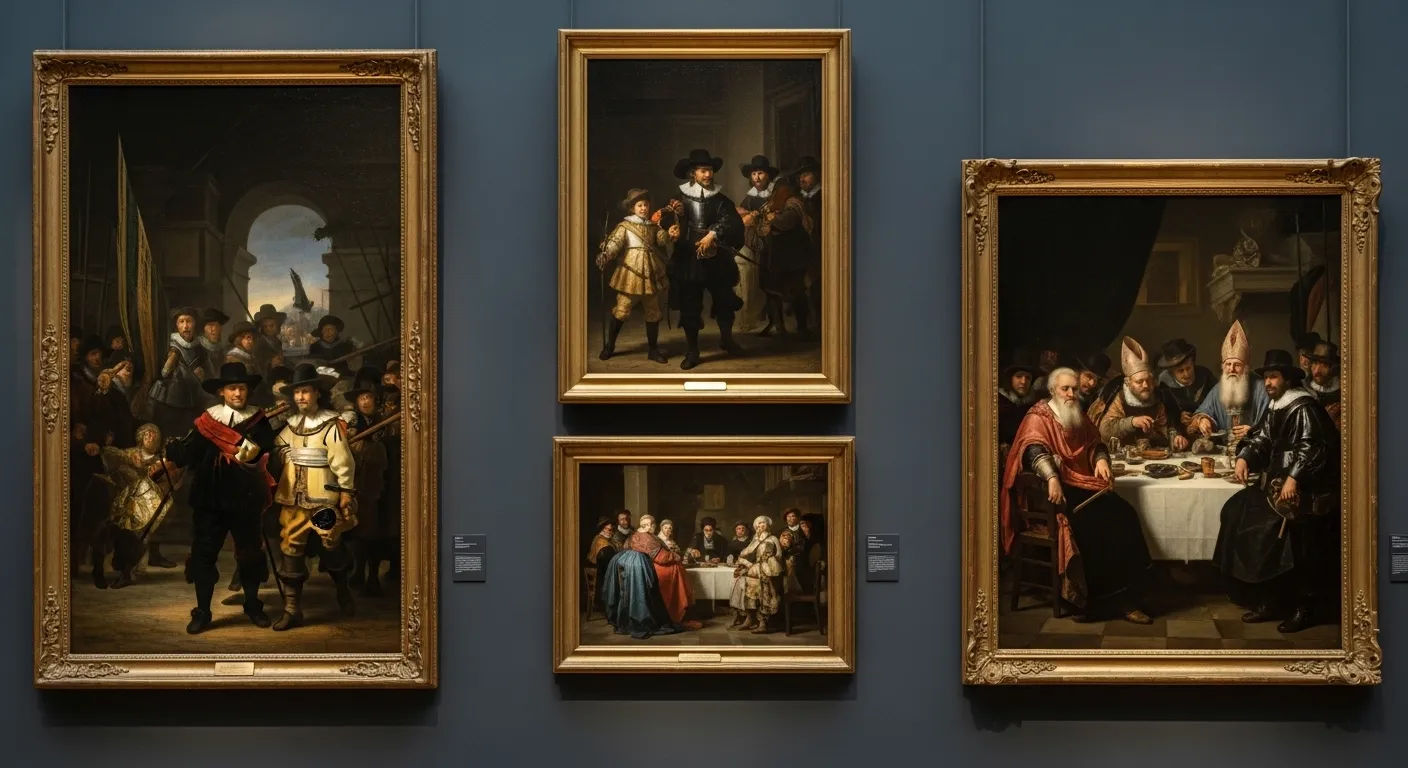
Sure, everyone’s rushing to snap pics with Rembrandt and Vermeer—but if you duck off the main drag, you’ll find bangers that hit just as hard. Like The Threatened Swan by Jan Asselijn: a swan going full mama bear on a dog, painted with such intensity it became a symbol of resistance during WWII. Or Gerard ter Borch’s The Letter, where a woman reads a note while her maid side-eyes like, “Not him again, sis.” These aren’t filler tracks—they’re emotional deep cuts. And since they don’t have crowds three rows deep, you can actually *see* ‘em. Pro move: skip the main hall at lunch rush and head to the 17th-century decorative arts wing. You’ll thank us later.
What’s the Deal with Light in Dutch Golden Age Painting?
If Dutch painters had a group text, it’d be titled “LIGHT STUDIES – DROP EVERYTHING.” Seriously, they were obsessed. Rembrandt used shadows and highlights like a DJ drops bass—deep darkness slashed by sudden beams that made faces glow like they just got good news. Vermeer? Dude basically invented cinematic lighting 300 years before Spielberg showed up. His windows don’t just let in sun—they carve space, texture, and mood like a director framing a scene. That’s why the rijksmuseum famous paintings feel alive, not frozen. It’s not about what’s shown—it’s about how it’s *revealed*. As one Amsterdam local put it over bitterballen: “They didn’t paint things. They painted how light *loves* things.”
How Do These Paintings Reflect Dutch Society of the 1600s?
Forget textbooks—the rijksmuseum famous paintings are your crash course in 17th-century Dutch life. This was the era of the Dutch Republic: rich, global, and surprisingly democratic for its time. No kings commissioning ego murals—instead, merchants, bakers, and ship captains bought art for their living rooms. Hence, the explosion of everyday scenes: markets, music lessons, wild parties, even someone making a bed. These paintings celebrated ordinary virtue, warned against dumb choices (we see you, Jan Steen), and flexed wealth through subtle symbols—a peeled lemon meant luxury, a broken pipe hinted at “YOLO.” Art was moral compass, status flex, and home decor—all in one. And honestly? Not much has changed. We still buy art to say, “This is who I am.”
Why Is Amsterdam the Perfect Home for These Masterpieces?
Amsterdam ain’t just a city—it’s a whole vibe. Canals shimmer like liquid chrome, bikes rattle over cobblestones, and coffee shops buzz with debates that sound like philosophy class after three espressos. It’s the kind of place where art doesn’t feel forced—it feels inevitable. And the Rijksmuseum? It’s the city’s heartbeat. Built in 1885 with that neo-Gothic-meets-Renaissance swagger, it sits proud at Museumplein, flanked by the Van Gogh Museum and Stedelijk like art’s holy trinity. The location’s no accident. Back in the 1600s, Amsterdam was the OG global trade hub—spices, silks, ideas flowing in from everywhere. With that wealth came culture. To put the rijksmuseum famous paintings anywhere else would be like playing jazz in a silent library. Here? They belong to the streets, the water, the very air.
Where Can You Dive Deeper Into the World of Dutch Masters?
If this whirlwind tour left you hungry for more, you’re in luck. Start with the Brandon Kralik homepage for fresh takes on art history that don’t read like your dentist’s waiting room pamphlet. Then, explore our dedicated Paintings category for deep dives into everything from Baroque drama to modern abstraction. And if you’re vibin’ with bold visual statements beyond the Golden Age, check out our feature on Big Modern Painting: Bold Statements—where scale meets soul in the 20th century. Whether you’re a casual admirer or a full-blown connoisseur, there’s always another layer to peel back in the world of rijksmuseum famous paintings.
Frequently Asked Questions
What is the most famous piece in the Rijksmuseum?
The most famous piece in the Rijksmuseum is undoubtedly Rembrandt’s The Night Watch (1642). This monumental group portrait revolutionized military painting with its dynamic composition, dramatic lighting, and sense of movement. It’s the centerpiece of the museum’s Gallery of Honour and remains the ultimate symbol of Dutch artistic genius. Millions flock to see this iconic work among the rijksmuseum famous paintings every year.
What is the #1 most famous painting in the world?
While opinions vary, Leonardo da Vinci’s Mona Lisa is widely considered the #1 most famous painting in the world. However, within the context of Dutch art and the Netherlands, The Night Watch holds comparable cultural weight. Among the rijksmuseum famous paintings, it stands as the national treasure that defines an era and a nation’s identity.
What artists are in the Rijksmuseum?
The Rijksmuseum boasts works by the titans of the Dutch Golden Age, including Rembrandt van Rijn, Johannes Vermeer, Frans Hals, Jan Steen, Gerard ter Borch, and Rachel Ruysch. These masters form the backbone of the collection, with their rijksmuseum famous paintings offering a panoramic view of 17th-century life, emotion, and technical innovation.
What famous paintings are in Amsterdam?
Amsterdam is home to some of the world’s most celebrated artworks, primarily housed in the Rijksmuseum. Key rijksmuseum famous paintings include Rembrandt’s The Night Watch, Vermeer’s The Milkmaid, and Frans Hals’ lively portraits. Beyond the Rijksmuseum, the Van Gogh Museum holds masterpieces like Sunflowers and The Bedroom, making Amsterdam a true capital of visual storytelling.
References
- https://www.rijksmuseum.nl/en/collection
- https://www.metmuseum.org/toah/hd/dutc/hd_dutc.htm
- https://www.nationalgallery.org.uk/paintings/dutch-golden-age
- https://www.britannica.com/art/Dutch-Golden-Age-painting