Black Artists Paintings Cultural Voices
- 1.
The Harlem Renaissance and the Birth of a Visual Legacy
- 2.
Mid-Century Masters: Bridging Tradition and Innovation
- 3.
Contemporary Voices Redefining the Art World
- 4.
Themes of Identity, Resistance, and Joy in Black Art
- 5.
Iconic Works That Changed the Course of Art History
- 6.
Museums, Collections, and the Fight for Representation
- 7.
Techniques and Styles Unique to Black Artistic Expression
- 8.
Market Trends and the Rising Value of Black Art
- 9.
Educational Initiatives and Community Art Programs
- 10.
Where to Explore and Support Black Artists Today
Table of Contents
black artists paintings
The Harlem Renaissance and the Birth of a Visual Legacy
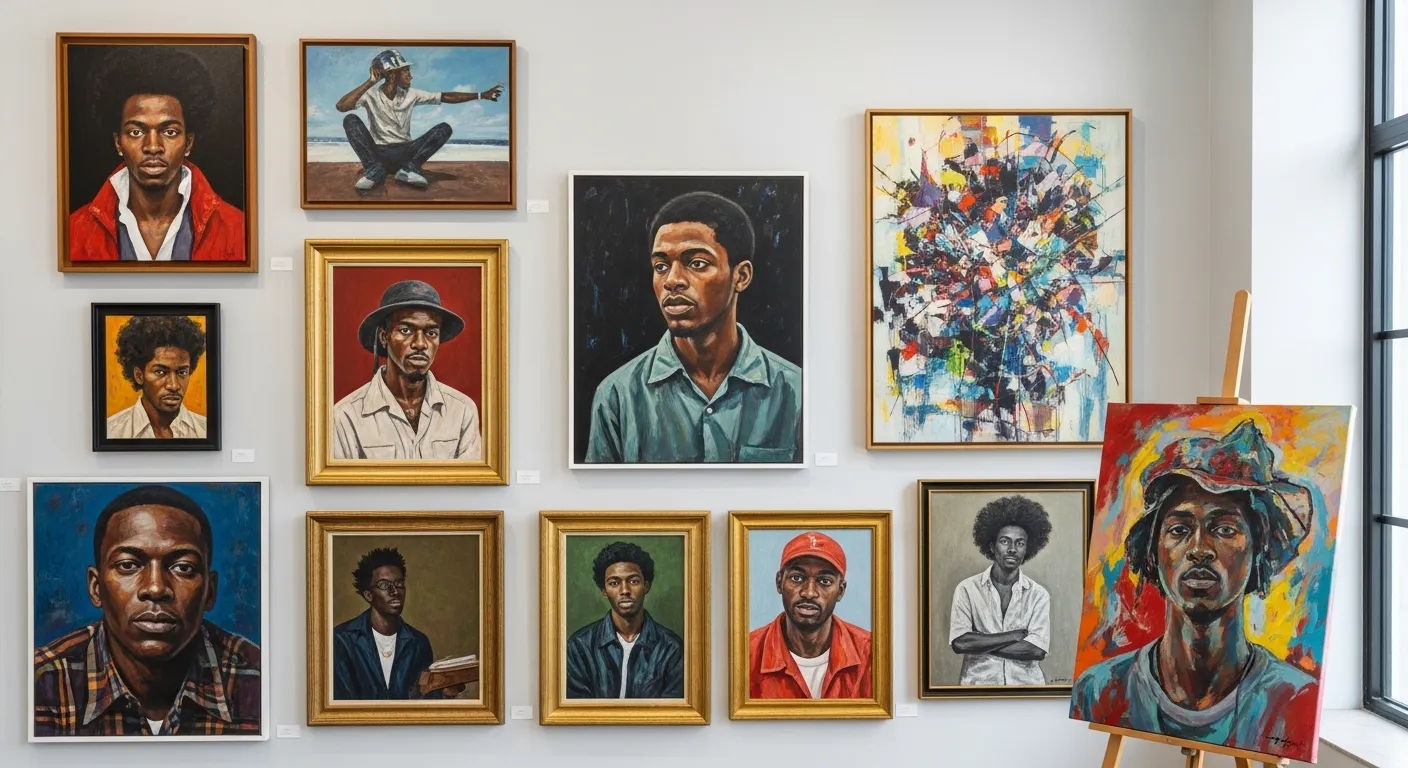
In the smoky jazz clubs and literary salons of 1920s Harlem, something revolutionary was brewing—not just in music or poetry, but on canvas too. Artists like Aaron Douglas didn’t just paint; they built visual mythologies that reimagined Black identity through African motifs, geometric abstraction, and celestial symbolism. His murals and illustrations became the aesthetic backbone of the Harlem Renaissance, and his influence echoes through every brushstroke of modern black artists paintings. These early pioneers refused to be confined by Eurocentric standards—they carved out their own visual grammar, one that celebrated Blackness as divine, complex, and worthy of monumental representation. The black artists paintings born from this era weren’t just art; they were acts of resistance, love letters to a people long denied their place in the canon.
Mid-Century Masters: Bridging Tradition and Innovation
Fast-forward to the 1950s and 60s, and black artists paintings began to evolve with the times—responding to civil rights marches, urban transformation, and global decolonization. Enter Jacob Lawrence, whose “Migration Series” told the epic story of Black Americans moving north not through words, but through bold, angular shapes and emotionally charged color palettes. Or Romare Bearden, who sliced up magazines and reassembled them into collages that pulsed with rhythm, memory, and Southern roots. These weren’t just pretty pictures; they were historical documents rendered in pigment and paper. The black artists paintings of this generation walked a tightrope between tradition and avant-garde experimentation, proving that Black art could be both deeply personal and universally resonant.
Contemporary Voices Redefining the Art World
Today, black artists paintings are no longer waiting for permission to take up space—they’re commanding it. Think of Kerry James Marshall, whose richly detailed scenes of everyday Black life refuse the absence of Black figures in Western art history. Or Amy Sherald, whose grayscale portraits of Michelle Obama and Breonna Taylor challenge how we see race, beauty, and dignity. These contemporary creators aren’t just making black artists paintings; they’re rewriting the rules of who gets to be seen, how they’re portrayed, and where their stories belong. Galleries that once ignored them now clamor for their work, and auction houses have taken notice—proving that authenticity, when paired with mastery, can’t be ignored forever.
Themes of Identity, Resistance, and Joy in Black Art
What ties together centuries of black artists paintings? It’s not just technique—it’s testimony. Whether depicting a quiet family dinner, a protest march, or a cosmic dreamscape, these works grapple with what it means to exist as Black in a world that often denies your humanity. But don’t mistake this for only pain. There’s joy here too—explosive, radiant, uncontainable joy. In Kehinde Wiley’s regal portraits, young Black men wear floral backdrops like crowns. In Faith Ringgold’s story quilts, narrative and needlework merge to celebrate community and resilience. The power of black artists paintings lies in their refusal to be reduced to a single story—they contain multitudes, just like the people they represent.
Iconic Works That Changed the Course of Art History
Some black artists paintings don’t just hang on walls—they shift cultural tectonic plates. Take Jean-Michel Basquiat’s “Untitled” (1982), a skull-like figure that sold for $110.5 million in 2017, making him the most expensive American artist ever at auction. Or Henry Ossawa Tanner’s “The Banjo Lesson” (1893), a tender father-son moment that countered racist caricatures with quiet dignity. Then there’s Alma Thomas’s vibrant abstractions, created in her 70s and 80s, which proved that age and race were no barriers to innovation. These aren’t just famous black artists paintings; they’re milestones in a long-overdue reckoning with whose vision shapes our shared visual culture.
Museums, Collections, and the Fight for Representation
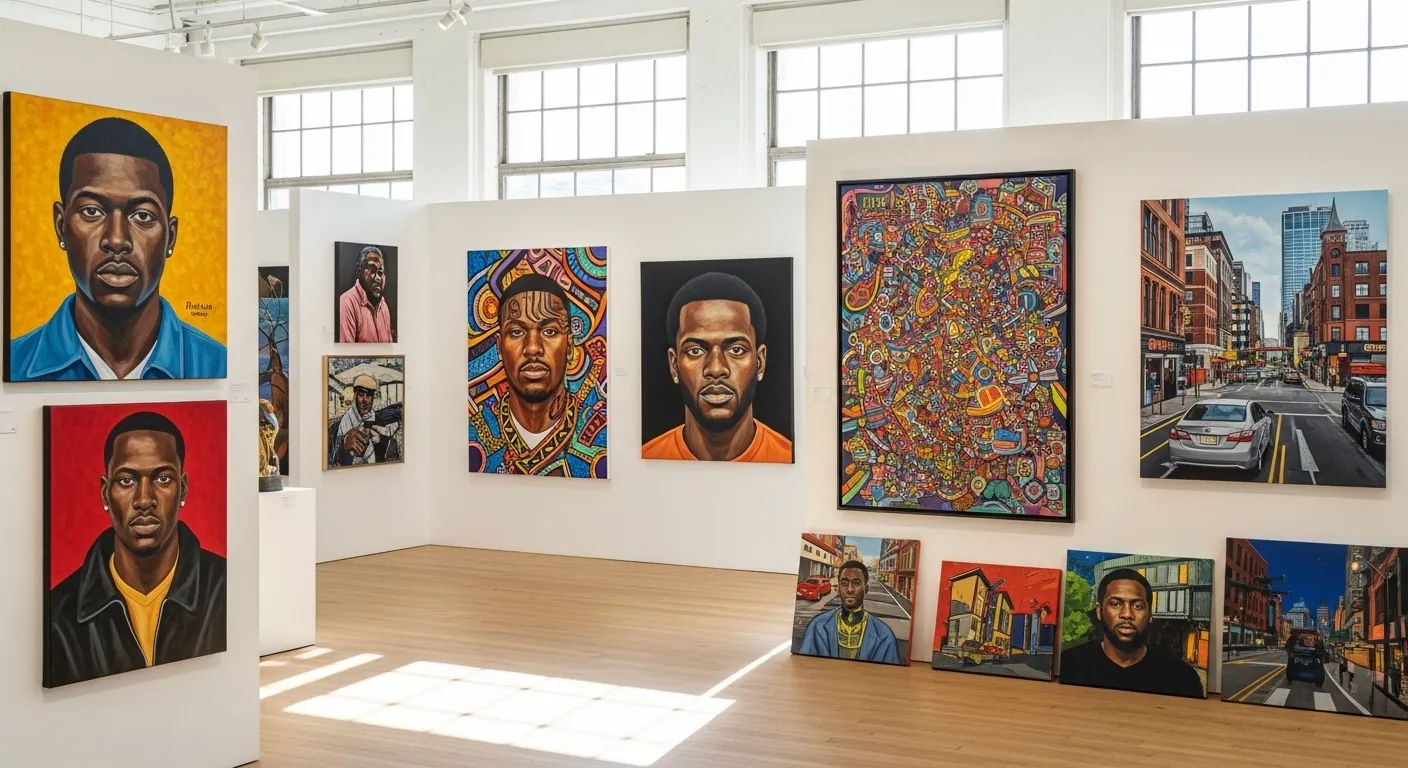
For decades, major museums treated black artists paintings as footnotes—if they acknowledged them at all. But thanks to activist collectors, curators, and artists themselves, that’s changing. The Studio Museum in Harlem, the National Museum of African American History and Culture, and even institutions like MoMA and the Met have begun integrating black artists paintings into their permanent displays, not as “special exhibits” but as essential chapters in art history. Still, the fight continues: less than 2% of museum acquisitions between 2008 and 2020 were works by Black artists, according to a 2022 study. Every time a gallery adds a new black artists paintings to its collection, it’s not just buying art—it’s correcting history.
Techniques and Styles Unique to Black Artistic Expression
From quilt-making traditions rooted in West Africa to the improvisational spirit of jazz translated onto canvas, black artists paintings often draw from a rich well of cultural techniques. Many blend realism with symbolism, using pattern, color, and composition to convey layers of meaning beyond the literal image. Others incorporate text, fabric, or found objects—like Betye Saar’s assemblages that transform racist memorabilia into powerful statements of reclamation. The stylistic range is vast, but a common thread runs through: intentionality. Every mark in these black artists paintings carries weight, whether it’s a delicate line defining a grandmother’s hands or a bold swath of red declaring “I am here.”
Market Trends and the Rising Value of Black Art
Let’s talk numbers—because the art market is finally catching up. In the past decade, prices for black artists paintings have skyrocketed. Works by Lynette Yiadom-Boakye now fetch over $1 million at auction. Julie Mehretu’s abstract epics sell for upwards of $6 million. Even emerging artists are seeing unprecedented demand. This isn’t just speculation; it’s recognition. Collectors and institutions alike are realizing that black artists paintings aren’t just culturally significant—they’re historically undervalued assets. While the $450 million sale you might’ve heard about refers to Leonardo da Vinci’s “Salvator Mundi” (not a Black artist), the real story is how Black creators are now commanding prices that reflect their true impact—finally getting their due after generations of exclusion.
Educational Initiatives and Community Art Programs
Thankfully, the next generation won’t have to fight as hard to see themselves in art. Across the U.S., nonprofits, schools, and community centers are launching programs centered on black artists paintings—teaching kids not just to appreciate, but to create. Organizations like the Black Artist Fund and initiatives like the Ford Foundation’s “Art for Justice” are providing grants, mentorship, and exhibition opportunities. These efforts ensure that the pipeline of talent stays strong, and that young artists know their voices matter. Because when a child paints their first self-portrait inspired by Kerry James Marshall or Faith Ringgold, they’re not just making art—they’re claiming their place in a legacy that’s finally getting the spotlight it deserves.
Where to Explore and Support Black Artists Today
If you’re moved by the power of black artists paintings and want to dive deeper, you’re in luck. Start by visiting the main hub at Brandon Kralik for thoughtful coverage of visual arts and cultural narratives, explore our curated collection in the Paintings category for insights into artistic movements across time, or read our feature on Diego Rivera Famous Paintings: Mural Stories to see how public art can shape national identity. Supporting Black artists isn’t just about buying—it’s about listening, learning, and amplifying. Follow them on social media, attend gallery openings, share their work. Because every time you engage with black artists paintings, you’re helping write a more honest, vibrant chapter in the story of art itself.
Frequently Asked Questions
Who is the most famous black artist?
While fame is subjective, Jean-Michel Basquiat is widely regarded as one of the most famous Black artists globally, known for his raw, poetic graffiti-inspired black artists paintings that critiqued power, race, and identity. His 1982 "Untitled" skull painting sold for $110.5 million, making him the most expensive American artist at auction. Other iconic figures include Kara Walker, Kerry James Marshall, and Faith Ringgold, all of whom have profoundly influenced contemporary art through their groundbreaking black artists paintings.
What are some famous paintings by black artists?
Some of the most celebrated black artists paintings include Aaron Douglas’s “Aspects of Negro Life” murals, Jacob Lawrence’s “The Migration Series,” Henry Ossawa Tanner’s “The Banjo Lesson,” Jean-Michel Basquiat’s “Untitled” (1982), Kerry James Marshall’s “Past Times,” and Amy Sherald’s portrait of Michelle Obama. These works span nearly a century and showcase the diversity, depth, and enduring power of black artists paintings in shaping cultural and historical narratives.
What painting sold for $450 million?
The painting that sold for approximately $450 million is Leonardo da Vinci’s “Salvator Mundi”—not a work by a Black artist. However, this record highlights the extreme disparity in the art market, where works by white European masters have historically dominated high-value sales. In contrast, the highest price for black artists paintings is Jean-Michel Basquiat’s “Untitled” (1982), which sold for $110.5 million in 2017—a landmark moment that signaled growing recognition of Black artistic genius in the global market.
Who are the greatest black artists?
Among the greatest Black artists are pioneers like Augusta Savage and Romare Bearden, mid-century visionaries like Jacob Lawrence and Elizabeth Catlett, and contemporary icons like Kara Walker, Kerry James Marshall, Faith Ringgold, and Kehinde Wiley. Each has contributed uniquely to the evolution of black artists paintings, using their work to explore identity, challenge injustice, and celebrate Black life. Their collective legacy proves that greatness in art isn’t just about technique—it’s about truth, courage, and the power to change how we see the world.
References
- https://www.metmuseum.org/exhibitions/black-artists-in-america
- https://www.smithsonianmag.com/arts-culture/history-black-artists-american-museums
- https://www.artnews.com/art-market/black-artists-auction-records-1234567890/
- https://www.tate.org.uk/art/artists/black-british-artists-history